
Twenty-eighth Sunday in Ordinary Time: Is 25:6-10a Phil 4:12-14, 19-20, Mt 22:1-14
10-11-2026Weekly ReflectionThe Faithful DiscipleGrow as a Disciple: Pray, Study, Engage, Serve
Today’s Gospel comes from the latter chapters of Matthew, in which Jesus repeatedly speaks about our readiness for the end times and the coming judgment. This parable concludes with the striking image of a man being thrown out of the king’s feast because he was not dressed in a proper wedding garment. While Tradition has often used this passage to communicate the importance of being properly disposed when approaching holy Communion, we ought not forget its other sense. To find a place at both the earthly and the heavenly wedding feast of the Lamb, we must strive to clothe ourselves with righteous deeds (see Rev. 19:7-9), cooperating with the grace the Lord has given us in baptism.
READ MORE
Twenty-seventh Sunday in Ordinary Time: Is 5:1-7, Phil 4:6-9, Mt 21:33-43
10-02-2026Weekly ReflectionThe Faithful DiscipleGrow as a Disciple: Pray, Study, Engage, Serve
I enjoy thinking about what it would have been like to hear Jesus’ teachings as a first-century Jew. When Jesus calls out the current tenants of the vineyard as being unfaithful, disobedient servants, however, it may have left the crowd feeling a bit anxious. And really, Jesus could say this to each of us at times because, like the wild grapes in the vineyard, when left to our own devices, we also have a tendency to fall into sin and produce unsavory fruit.
READ MORE
Twenty-sixth Sunday in Ordinary Time: Ez 18:25-28, Phil 2:1-11, Mt 21:28-32
09-25-2026Weekly ReflectionThe Faithful DiscipleGrow as a Disciple: Pray, Study, Engage, Serve
Ask any long-time educator, and they’ll tell you we often learn more from our mistakes than from doing it perfectly from the start. Today's Gospel also seems to send the same message: Jesus tells us that tax collectors and prostitutes are entering the kingdom of God before the chief priests and elders.
READ MORE
Twenty-fifth Sunday in Ordinary Time: Is 55:6-9, Phil 1:20c-24, 27a, Mt 20:1-16a
09-18-2026Weekly ReflectionThe Faithful DiscipleGrow as a Disciple: Pray, Study, Engage, Serve
Writing to the Philippians while in prison, St. Paul feels complete peace about his fate. To stay on this earth means fruitful labor for him; to die means entering eternal life with God. Having lived apart from God in the past, he finds immense joy at being able to labor for the Lord, despite the suffering it entails.
READ MORE
Twenty-fourth Sunday in Ordinary Time: Sir 27:30-28:7, Rom 14:7-9, Mt 18:21-35
09-11-2026Weekly ReflectionThe Faithful DiscipleGrow as a Disciple: Pray, Study, Engage, Serve
It strikes me that the real issue in the Gospel is that the first man whose debt the king forgives fails to see that his fellow servant who owes him a smaller debt is just like himself. “Could anyone refuse mercy to another like himself, can he seek pardon for his own sins?” Sirach asks.
READ MORE
Twenty-third Sunday in Ordinary Time: Ez 33:7-9, Rom 13:8-10, Mt 18:15-20
09-04-2026Weekly ReflectionThe Faithful DiscipleGrow as a Disciple: Pray, Study, Engage, Serve
St. Teresa of Calcutta once wrote, “If we have no peace, it is because we have forgotten that we belong to each other.” Community, when lived according to Christ’s command to love one another, fills us with joy and companionship. In the Gospel, Jesus tells the disciples that living as a Church also means holding one another accountable when a member of the community has gone astray.
READ MORE
Twenty-second Sunday in Ordinary Time: Jer 20:7-9, Rom 12:1-2, Mt 16:21-27
08-28-2026Weekly ReflectionThe Faithful DiscipleGrow as a Disciple: Pray, Study, Engage, Serve
Peter, understandably, responded to Christ’s foreshadowing of his death with shock and horror – insisting that Jesus would not suffer and die. But Christ’s words to his disciples taught them all to respond with humble obedience, trusting in the mission of God without fully understanding it. And Jeremiah in the first reading felt that God had “duped” him.
READ MORE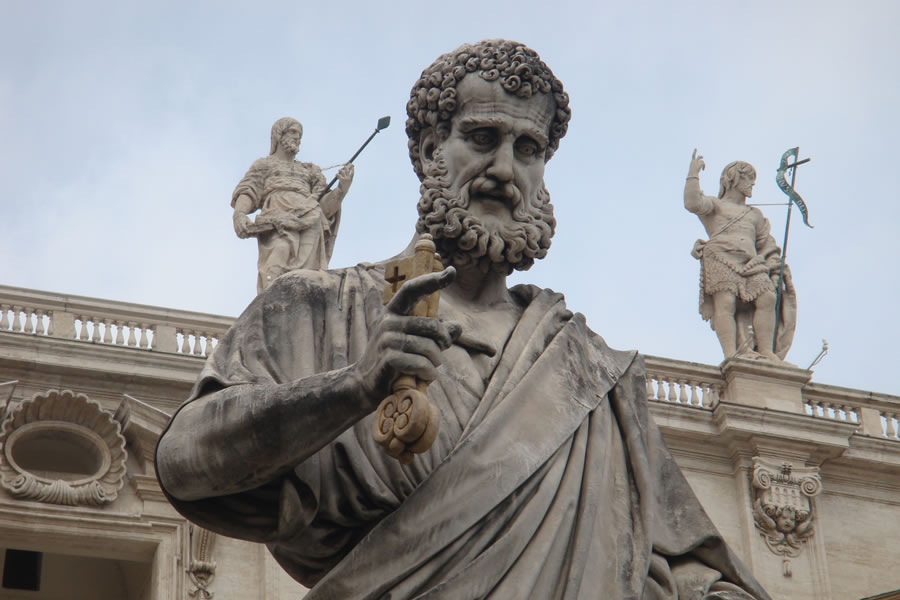
Twenty-first Sunday in Ordinary Time – Is 22:19-23; Rom 11:33-36; Mt 16:13-20
08-21-2026Weekly ReflectionThe Faithful DiscipleGrow as a Disciple: Pray, Study, Engage, Serve
In today’s second reading, St. Paul reflects in awe over the “depth of the riches and wisdom and knowledge of God.” God’s judgments are inscrutable, his ways unsearchable, he goes on to say. While on our own, we cannot know the depth of who God is and the beauty of his plan for us, we have been given access to this knowledge by the Holy Spirit.
READ MORE
Twentieth Sunday in Ordinary Time – Is 56:1, 6-7; Rom 11:13-15, 29-32; Mt 15:21-28
08-14-2026Weekly ReflectionThe Faithful DiscipleGrow as a Disciple: Pray, Study, Engage, Serve
I have often wondered why Jesus’ words to the Gentile woman in today’s Gospel sound so harsh. The woman was simply asking Jesus to heal her daughter, as so many others before her had done. Jesus’ reply that he had been sent only to the “lost sheep of the house of Israel” may have been true under the old covenant.
READ MORE
Nineteenth Sunday in Ordinary Time – 1 Kgs 19:9a, 11-13a; Rom 9:1-5; Mt 14:22-33
08-07-2026Weekly ReflectionThe Faithful DiscipleGrow as a Disciple: Pray, Study, Engage, Serve
As I prepared to become a teacher, a professor reminded me that the most effective way to command the attention of a room full of boisterous students is to lower my voice. Matching their volume only adds to the chaos. But approaching with a low, calm voice demands attention due to the contrast in volume.
READ MORE